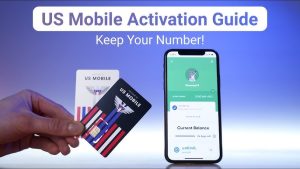
Yes, you can switch carrier and keep your phone number in the United States — and federal law protects that right. The Federal Communications Commission (FCC) has required Local Number Portability (LNP) since 2003, meaning your wireless carrier cannot hold your phone number hostage when you decide to leave. According to the FCC, the porting process for most wireless-to-wireless transfers should complete within a few hours, though it can occasionally stretch to 24–48 hours depending on the carriers involved.
This guide walks through exactly how the porting process works, what information you need, how to avoid losing your number, and which switching deals offer the best value as of 2026.
How Number Porting Works in the United States
Number portability is governed by the FCC under the Telecommunications Act of 1996 and subsequent rules expanded in 2003. When you request to move your number, your new carrier (the “recipient”) submits a port request to your old carrier (the “donor”) through a centralized database operated by iconectiv, the official Local Number Portability Administrator designated by the FCC.
The donor carrier verifies your account information, releases the number, and the recipient activates it on their network. According to FCC data, wireless-to-wireless ports are typically completed within 2.5 hours, while landline-to-wireless transfers can take up to four business days.
Key points to understand:
- You must initiate the port through the new carrier, never by canceling first.
- Your number must be active on your current account at the time of the port.
- Ports are free to consumers — federal rules prohibit carriers from charging porting fees.
- You can port any US mobile number, and most landline numbers, provided the new carrier services your area.
What You Need Before You Start
Gather this information before contacting the new carrier. Missing or mismatched details are the single largest cause of port failures, according to industry data from the Number Portability Administration Center.
- Account number from your current carrier (found on your bill or in the carrier app).
- Account PIN or transfer PIN — since 2021, the FCC has required carriers to use a PIN system to combat port-out fraud and SIM-swapping.
- Billing ZIP code exactly as it appears on your account.
- Full name and address matching the current account holder.
- Phone number you want to port.
- A new SIM card or eSIM from the receiving carrier.
For most major carriers — Verizon, AT&T, T-Mobile, and their prepaid brands — you can generate a transfer PIN directly in the carrier app within minutes. If you have multiple lines on a family plan, you’ll need separate PINs for each line being ported.
How to Switch Phone Carrier and Keep Number: Step by Step
Here is the exact sequence that minimizes downtime and protects your number:
- Do not cancel your current plan. Canceling first releases the number back to the carrier pool, and recovering it ranges from difficult to impossible.
- Choose your new carrier and plan. Compare coverage maps — the FCC’s National Broadband Map shows wireless coverage by ZIP code.
- Request a transfer PIN from your current carrier (typically via the app or by dialing customer service).
- Sign up with the new carrier and select “bring your own number” or “port my number” during checkout.
- Enter your account number, transfer PIN, and billing details exactly as they appear on your existing account.
- Activate the new SIM or eSIM when prompted. Most carriers send a confirmation text once the port completes.
- Verify the port by making and receiving a test call. Your old service deactivates automatically once the number transfers.
If a port stalls beyond 48 hours, contact the new carrier first — they own the port request and must escalate it through iconectiv.
Port Number to New Carrier USA: Common Pitfalls
The FCC’s Consumer Complaint Center receives thousands of porting complaints annually, and the patterns are predictable. Avoid these errors:
- Mismatched account information. If your billing address recently changed, update it with your current carrier before porting.
- Expired transfer PIN. Most PINs expire within 7 days. Generate one immediately before you start the port.
- Outstanding device payments. You can still port the number, but the remaining device balance becomes due in full on your final bill.
- Business or employer-owned numbers. If your line is on a corporate account, only the account administrator can authorize the port.
- Prepaid balance loss. Unused prepaid credit generally does not transfer between carriers.
Port-out fraud is also a growing risk. The FBI’s Internet Crime Complaint Center reported a sharp increase in SIM-swap and unauthorized port-out cases over the past several years. Enable port-out protection in your carrier app — every major US carrier offers this free feature.
Best Prepaid Carrier Switching Deals as of 2026
Prepaid plans now run on the same three networks (Verizon, AT&T, T-Mobile) as postpaid plans, often at half the cost. According to recent BLS Consumer Expenditure data, the average US household spends over $1,400 annually on cellular service — prepaid switchers can typically cut that by 40–60%.
Categories of switching deals worth comparing:
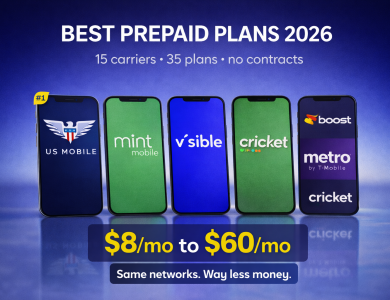
- Bring-your-number bonus credits. Mint Mobile, US Mobile, and Visible regularly offer $25–$100 in account credit for porting in an active line.
- Free months of service. Several MVNOs offer 1–3 months free with annual prepayment when you port a number.
- Trade-in plus port combos. Major carriers’ prepaid arms (Cricket, Metro by T-Mobile, Total Wireless) often combine device discounts with port-in credits.
- Family multi-line deals. Per-line costs typically drop 20–40% when porting two or more numbers simultaneously.
Always confirm coverage in your specific area before switching. A cheap plan on a network that doesn’t reach your home or commute route is no bargain.
How to Cancel Phone Plan Without Losing Number
The phrase “cancel phone plan without losing number” is technically a misnomer — you should never cancel first. Instead, the port request itself acts as the cancellation. Once your new carrier completes the transfer, your old account closes automatically for that line.
Three scenarios require extra care:
- Postpaid contracts with installment plans. Federal rules don’t require carriers to waive remaining device balances. Expect a final bill covering the device payoff and any prorated service charges. Early termination fees were largely phased out years ago but may still apply to certain business accounts.
- Family plans where only one line is leaving. Porting one number out doesn’t cancel the entire account. The primary account holder should confirm the remaining plan structure with the donor carrier afterward.
- Numbers on suspended or past-due accounts. Carriers can refuse to release a number until the account is current. Pay any outstanding balance before initiating the port.
Request a final bill in writing and verify the account shows a $0 balance within 30 days.
What Experts Recommend
Consumer-protection analysts and telecom industry researchers consistently advise the following best practices when switching carriers:
- Test the new network first. Most major carriers offer free trial eSIMs (typically 7–30 days) that let you verify coverage before porting. Industry analysts cite coverage dissatisfaction as the leading reason switchers regret their decision.
- Time the switch mid-billing cycle. Federal rules require carriers to refund unused prepaid service, but postpaid carriers are generally not required to prorate the final month. Switching shortly after a bill cycle starts can cost an extra month of service.
- Document everything. Screenshot your transfer PIN, port confirmation, and final bill. Consumer-advocacy groups note that documented evidence dramatically improves outcomes when disputes reach the FCC or state public utility commissions.
- Enable two-factor authentication via authenticator app, not SMS, during the port window. SMS-based 2FA can briefly fail during a port and is also the primary target of SIM-swap fraud.
- Keep the old SIM for 30 days in case you need to reverse the port.
State-Specific and Regulatory Considerations
While number portability is federally regulated, some consumer-protection rules vary by state. California, New York, and Massachusetts have additional disclosure requirements for wireless contracts and early termination fees. The California Public Utilities Commission, for example, enforces stricter rules on final billing disclosures than the federal baseline.
If you encounter a porting dispute:
- File a complaint with the new carrier (the porting carrier) first.
- If unresolved within 30 days, file with the FCC Consumer Complaint Center at fcc.gov/consumers.
- For billing-related issues, your state attorney general’s consumer-protection division or state public utility commission can intervene.
The FCC reports that the majority of formally filed porting complaints are resolved within 30 days once escalated. Federal rules also prohibit carriers from rejecting ports for reasons unrelated to verification — such as unpaid balances on other lines or contract terms that have already lapsed.
When to consult a professional: If your number is tied to a business, multiple devices, a medical alert system, or two-factor authentication for financial accounts, consider consulting your IT provider or carrier’s business support team before porting. A botched port on a critical line can disrupt account access for days.
Final Checklist Before You Switch
Before initiating the port, run through this checklist to avoid the most common failure points:
| Item | Status |
|---|---|
| Confirmed new carrier coverage at home/work | ✓ |
| Generated transfer PIN from current carrier | ✓ |
| Recorded account number and billing ZIP exactly | ✓ |
| Paid any outstanding balance or device payoff | ✓ |
| Switched 2FA to authenticator app (not SMS) | ✓ |
| Backed up contacts, photos, authenticator codes | ✓ |
| Did NOT cancel current service | ✓ |
Following this sequence, the vast majority of US consumers complete a carrier switch with no downtime and no loss of their phone number.
Frequently Asked Questions
- How long does it take to switch carriers and keep my number?
- Most wireless-to-wireless ports in the US complete within 2 to 24 hours, according to FCC data. Simple ports between major carriers often finish in under an hour. Landline-to-wireless transfers can take up to four business days because they involve additional verification steps. Delays usually stem from mismatched account information, an expired transfer PIN, or an unpaid balance on the donor account. If the port takes longer than 48 hours, contact your new carrier — they own the port request and are responsible for escalating it through the national porting administrator.
- Does it cost anything to port my phone number to a new carrier?
- No. Federal Communications Commission rules prohibit US carriers from charging consumers a fee to port a phone number, whether incoming or outgoing. However, you may still owe your current carrier for any unpaid service, remaining device installments, or accessory plans. Some carriers also charge a small SIM card or activation fee on the new account, typically $5 to $35. Porting itself is always free. If a carrier tries to charge you a porting fee, file a complaint with the FCC Consumer Complaint Center, which has authority to investigate.
- Can I switch carriers if I still owe money on my phone?
- Yes. You can port your number even with an outstanding device balance, but the remaining amount becomes due in full on your final bill. Carriers cannot block a port simply because you owe money on a device. However, if your account is past due or suspended for non-payment, the carrier can refuse to release the number until the account is current. Before switching, log into your carrier app and check both your device payoff amount and your account status. Pay any past-due balance first to prevent the port from being rejected.
- What happens if my port request fails?
- Failed ports usually result from mismatched details — wrong account number, expired transfer PIN, or a billing ZIP that doesn’t match the donor carrier’s records. Your old service continues uninterrupted, and you can simply correct the information and resubmit. Contact your new carrier first; they own the port request. If the donor carrier is blocking the port without a valid reason, file a complaint with the FCC. Carriers are prohibited from rejecting ports for reasons unrelated to verification, such as contract status or marketing-retention attempts.
- Can I keep my number if I switch from postpaid to prepaid?
- Absolutely. Number portability rules apply identically to postpaid, prepaid, and MVNO services. You can port from Verizon postpaid to Mint Mobile, from AT&T to Cricket, or from T-Mobile to Metro — and vice versa. The process is the same: get a transfer PIN, sign up with the new prepaid carrier, and provide your account details. Prepaid switching often comes with port-in bonuses such as account credit or free months of service. Just remember that unused prepaid balance on your old account typically does not transfer.
- Will my phone work on the new carrier?
- Most modern unlocked phones sold in the US work on all three major networks (Verizon, AT&T, T-Mobile) and their MVNOs. Phones purchased through a carrier may be locked until the device is paid off — federal law and carrier policies require unlocking once eligibility criteria are met. Before switching, check your phone’s IMEI compatibility on the new carrier’s website; every major carrier offers a free compatibility checker. You’ll also need a new SIM card or eSIM. If your phone is more than five or six years old, verify it supports the new carrier’s current network bands.
- Can I port a number that’s been disconnected?
- Generally, no. Your number must be active on your current account at the time of the port request. Once a number is disconnected, carriers typically hold it in a quarantine period (often 45 to 90 days) before recycling it to a new customer. During quarantine, recovering the number is difficult and depends entirely on the donor carrier’s policies. This is why you should never cancel your existing service before initiating the port. The new carrier handles the disconnection automatically once the transfer completes.
- How do I protect my number from port-out fraud?
- Port-out fraud — where scammers transfer your number to gain access to bank and email accounts — has risen sharply in recent years. Every major US carrier now offers free port-out protection: a PIN or passcode required before any port can be authorized. Enable it in your carrier app immediately. Also switch any two-factor authentication from SMS to an authenticator app like Google Authenticator or Authy, since SMS-based 2FA is the primary target. If you receive an unexpected text saying your number is being transferred, contact your carrier immediately to halt the port.