MVNO cheap cell phone plans let American consumers access the same Verizon, AT&T, and T-Mobile networks for a fraction of the price — often $10 to $30 per month instead of $70 to $100. These Mobile Virtual Network Operators lease wholesale capacity from the major carriers and pass the savings on to subscribers, making them the single most effective way for budget-conscious households to cut their wireless bills without sacrificing coverage [3].
This guide explains how MVNOs work, which carriers offer the best value as of 2026, and how to choose a plan that matches your data usage, network preference, and travel patterns.
What Is an MVNO and How Does It Work?
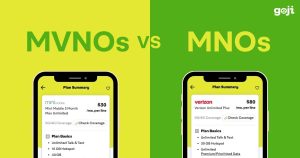
A Mobile Virtual Network Operator (MVNO) is a wireless provider that does not own cellular towers or spectrum. Instead, it purchases network access in bulk from one of the three major US carriers — Verizon, AT&T, or T-Mobile — and resells that service under its own brand [3]. Because MVNOs avoid the massive capital expenses tied to building and maintaining infrastructure, they can offer significantly lower monthly rates.
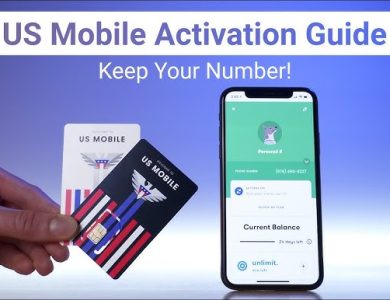
Most MVNOs operate on a prepaid, no-contract model. You pay for service month-to-month (or annually for deeper discounts), and you can switch providers without termination fees. Many support eSIM activation, which means you can sign up and have service running within minutes on a compatible smartphone [4].
The trade-off: during periods of network congestion, MVNO customers may be deprioritized behind the host carrier’s direct subscribers, resulting in slower speeds at peak times. Bundled perks like free streaming subscriptions or international roaming are also less common than on postpaid major-carrier plans [3][7].
MVNO vs Major Carriers: The Real Difference
The mvno vs major carriers difference comes down to four factors: price, priority, perks, and customer service. On price, MVNOs typically charge 40% to 70% less than equivalent postpaid plans from Verizon, AT&T, or T-Mobile. A single line of unlimited data that costs $80 on a major carrier often runs $25 to $30 on an MVNO using the same network [1][3].
On priority, major-carrier customers usually get first access to bandwidth when towers are congested. Most MVNO users won’t notice the difference outside of crowded stadiums or rush-hour commutes, but heavy streamers in dense urban areas may.
On perks, postpaid carriers bundle services like Netflix, Apple TV+, or hotspot data more generously. MVNOs strip these extras to keep prices low, though some — like Visible by Verizon — include unlimited hotspot at capped speeds [1].
On customer service, MVNOs lean heavily on app-based and chat support rather than retail stores. For tech-comfortable users, this is rarely an issue; for others, brands like Consumer Cellular emphasize US-based phone support [9].
Best MVNO Phone Plans in the USA Right Now
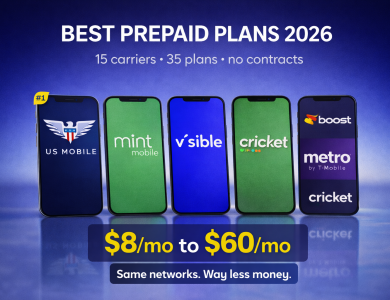
Several brands consistently rank among the best mvno phone plans usa consumers can choose from. Each leans on a specific host network, which matters depending on where you live and travel.
- US Mobile — Uniquely lets subscribers pick Verizon, AT&T, or T-Mobile as the underlying network. Its Unlimited Starter plan runs $25/month, and an annual prepay drops the effective cost to about $18.80/month [1][3][4].
- Mint Mobile — Runs on T-Mobile with unlimited data around $30/month when prepaid in multi-month blocks [3].
- Visible — Owned by Verizon, offers a $25/month unlimited plan with unlimited mobile hotspot capped at 5 Mbps [1].
- Total Wireless — A Verizon-owned MVNO offering $25/month service with priority data and a 5-year price lock [1].
- Consumer Cellular — Popular with seniors for its straightforward pricing and US-based customer service [9].
Coverage maps and network preference should drive your choice as much as price. A $20 plan is useless if your home or commute falls in a weak-signal area for that host network.
Cheapest MVNO Unlimited Data Plans Compared
For heavy users, the cheapest mvno unlimited data plans typically cluster between $20 and $30 per month. The cheapest true unlimited options on the market right now include:
| Carrier | Monthly Price | Host Network | Notable Feature |
|---|---|---|---|
| US Mobile Unlimited Starter | $25 | Choice of 3 | Network flexibility [1][3] |
| Visible | $25 | Verizon | Unlimited hotspot (5 Mbps) [1] |
| Total Wireless | $25 | Verizon | 5-year price lock [1] |
| Mint Mobile Unlimited | ~$30 | T-Mobile | Prepaid multi-month savings [3] |
If you don’t truly need unlimited data, capped plans are dramatically cheaper. Tello plans start at $8/month, Red Pocket offers a $5/month plan, and Red Pocket’s $10/month tier includes 3GB of high-speed data [6][9]. MobileX sells 3GB for $6.99/month with quarterly billing, and Boost Mobile has run a 30GB-for-$10/month promo for new customers [1][3].
Who Benefits Most from Budget Mobile Virtual Network Operator Plans
Budget mobile virtual network operator plans are not just for low-income households. According to Bureau of Labor Statistics consumer expenditure data, the average US household spends well over $1,000 per year on cellular service. Switching from a postpaid major carrier to a comparable MVNO can save a family of four $1,500 to $2,500 annually.
The strongest candidates for MVNO service include:
- Light-to-moderate data users who stream mostly over Wi-Fi at home or work.
- Students looking for short-term, no-contract service — Ultra Mobile is frequently recommended in this category [8].
- Seniors who want predictable bills and simple support, where Consumer Cellular performs well [9].
- Second-line users who need a dedicated work or travel phone.
- Families with multiple lines, where per-line savings compound quickly.
Users who travel internationally often, depend on premium streaming bundles, or live in rural areas with marginal coverage may find a major-carrier postpaid plan still makes sense.
What Experts Recommend When Choosing an MVNO
Industry analysts and consumer-advocacy publications generally converge on a four-step evaluation framework for selecting an MVNO. First, identify which major network has the strongest coverage at your home, workplace, and frequent destinations — then shortlist only MVNOs that ride on that network [4][10].
Second, track your actual data usage for one to two months using your phone’s built-in cellular data meter. Most US smartphone users consume less than 15GB per month, meaning a $10 to $15 capped plan is often sufficient [6].
Third, prioritize MVNOs with transparent pricing and no expiring promotional rates. Carriers like Total Wireless advertise multi-year price locks, which protect against the kind of mid-contract increases common at major carriers [1].
Fourth, verify that the MVNO supports the features you actually use: Wi-Fi calling, eSIM, mobile hotspot, 5G access, and Visual Voicemail are not universal. Reviewers at PCMag and WhistleOut emphasize checking these in advance, since some budget plans throttle hotspot speeds or omit 5G entirely [4][9].
How to Switch to an MVNO Without Losing Your Number
Porting your phone number to an MVNO is protected under FCC rules, which require carriers to transfer numbers within one business day in most cases. The process typically takes under an hour end-to-end:
- Confirm device compatibility. Most unlocked phones sold in the US since 2020 work on all three major networks, but verify by entering your IMEI on the new MVNO’s website.
- Request an account number and transfer PIN from your current carrier. Federal rules require carriers to provide these on request.
- Sign up with the new MVNO and enter your existing phone number, account number, and PIN during checkout.
- Activate the new SIM or eSIM. Service usually cuts over within 15 minutes to a few hours.
- Confirm service by sending a test call and text before discarding the old SIM.
Do not cancel your old plan before the port completes — canceling first can cause you to lose the number permanently.
Risks, Limitations, and When to Stick with a Major Carrier
MVNOs are a strong fit for most users, but they have real limitations. Network deprioritization can noticeably slow speeds at large events or in congested areas. International roaming is often limited or charged à la carte. Customer support is typically online-only, which can frustrate users who prefer in-store help.
As of 2026, federal regulators including the FCC continue to monitor wireless competition and pricing, but consumers remain responsible for verifying coverage and contract terms before switching. If your livelihood depends on uninterrupted mobile service — for example, rideshare drivers, field technicians, or remote workers in fringe coverage zones — testing an MVNO with a short prepaid month before fully porting is the safer approach.
For complex situations involving business lines, accessibility needs, or bundled home internet discounts, consulting directly with both your current carrier and a prospective MVNO’s customer service team is advisable before making the switch.
References
- Best Cheap Phone Plans – BestMVNO
- The Best MVNOs – MoneySavingPro
- Best MVNO Phone Plans: Compare Top Cheap Carriers – Goji Mobile
- Best MVNOs: Compare Top Carriers and Plans – WhistleOut
- BestMVNO: Compare Phone Plans, Prepaid Deals & MVNO News
- Cheapest Cell Phone Plans: $4-$50 Per Month – InCharge
- The 5 Best MVNO Carriers for Cheaper Cell Phone Bills – How to Money
- What is the best MVNO for Android users? – Android Central
- The Best Cheap Phone Plans – PCMag
- Best AT&T MVNOs – Clark.com
Frequently Asked Questions
- Are MVNO cheap cell phone plans really as good as major carriers?
- For most users, yes. MVNOs run on the exact same Verizon, AT&T, and T-Mobile towers, so coverage is identical to the host carrier. The main differences are network prioritization during congestion and fewer bundled perks like streaming services. If you mostly use cellular data outside peak hours and in normal locations, you’ll likely never notice a difference. Heavy users in dense urban areas during rush hour or at large events may occasionally experience slower speeds, but the savings — often $40 to $60 per line per month — make the trade-off worthwhile for the vast majority of American households.
- What is the cheapest MVNO plan in the US right now?
- Red Pocket offers a plan starting at $5 per month, making it one of the cheapest options on the market. Tello plans start at $8 per month, MobileX runs $6.99 per month for 3GB when billed quarterly, and Red Pocket’s $10 tier includes 3GB of high-speed data. These ultra-low-cost plans suit light users who mostly rely on Wi-Fi. If you need unlimited data, expect to pay $25 to $30 monthly with carriers like US Mobile, Visible, Total Wireless, or Mint Mobile, all of which represent significant savings versus postpaid major-carrier plans.
- Will I keep my phone number if I switch to an MVNO?
- Yes. FCC rules require carriers to port your phone number to a new provider, usually within one business day. To switch successfully, request an account number and transfer PIN from your current carrier, sign up with the new MVNO using your existing number, then activate the new SIM or eSIM. Do not cancel your old service before the port completes — canceling first can cause permanent number loss. Most ports finish within 15 minutes to a few hours. The process is free, and your number works the same on the new network once activation finishes.
- Do MVNOs work with iPhones and Android phones?
- Yes. Nearly all unlocked iPhones and Android phones sold in the US since 2020 work on every major MVNO. Before switching, check that your phone is unlocked and verify compatibility by entering your IMEI on the MVNO’s website — most carriers offer a free compatibility checker. Many MVNOs now support eSIM activation, meaning you can sign up and have service running in minutes without waiting for a physical SIM card. If you bought your phone directly from Verizon, AT&T, or T-Mobile, request an unlock from your current carrier before porting your number.
- Which MVNO has the best coverage?
- Coverage depends on the underlying network, not the MVNO brand. Verizon-based MVNOs like Visible, Total Wireless, and US Mobile Warp typically offer the broadest rural coverage. AT&T-based MVNOs like Cricket and Consumer Cellular perform well across most of the country. T-Mobile-based MVNOs like Mint Mobile offer the strongest 5G speeds in metro areas. The best approach: check coverage maps from all three major networks at your home, workplace, and frequent destinations, then choose an MVNO that rides on the strongest network for your specific locations.
- Can I use an MVNO for international travel?
- It depends on the carrier. Most MVNOs offer limited international roaming compared to major postpaid plans. Some, like US Mobile and Google Fi, include international features in select plans, while others charge per-minute or per-MB rates abroad. T-Mobile-based MVNOs sometimes inherit basic international data access, but speeds may be throttled. For frequent international travelers, a major-carrier plan or a dedicated travel eSIM may be more practical. If you only travel abroad once or twice a year, a short-term local SIM or travel eSIM purchased at your destination is usually cheaper than any US-based roaming add-on.
- How much can a family of four save by switching to an MVNO?
- A family of four switching from a major postpaid carrier to a comparable MVNO can typically save $1,500 to $2,500 per year. Major-carrier family plans often run $160 to $200 per month for four unlimited lines, while four lines at an MVNO like US Mobile, Visible, or Total Wireless cost around $80 to $100 monthly. Annual prepay options drop the cost further — US Mobile’s annual plan, for example, works out to about $18.80 per line per month. Track your actual data usage first; many families discover they don’t need unlimited data and can save even more with capped plans.
- Are MVNO plans safe and legitimate?
- Yes, MVNOs are fully legitimate, FCC-regulated wireless providers. They operate under the same federal consumer protections as major carriers, including number portability rights, billing transparency requirements, and access to emergency 911 services. Established MVNOs like Mint Mobile, Visible, Consumer Cellular, US Mobile, and Total Wireless serve millions of US customers, and several are owned by the major carriers themselves — Visible and Total Wireless by Verizon, for instance. Stick with well-reviewed brands listed on consumer publications like PCMag, WhistleOut, or BestMVNO to avoid lesser-known resellers with poor customer service or unclear billing practices.