The Hidden Revenue Leak: Why Dermatology Billing Demands a Specialized Lens
Every time you document a lesion removal, a laser treatment, or a biopsy, you’re drawing a line between medical necessity and cosmetic care that a payer can second-guess months after the fact. Get that line wrong, and you’re not just losing a claim—you’re inviting an audit that can claw back years of reimbursements.
Generic billing errors hit dermatology harder than most specialties. The American Academy of Dermatology has consistently flagged improper modifier usage and insufficient documentation of medical necessity as top denial triggers. When a practice runs a denial rate above 5–10%—a range many dermatology clinics quietly exceed—the cash flow lag compounds fast. A single denied Mohs surgery claim can stall $400–$1,200 in reimbursement, and if the appeal drags 45–90 days, that revenue sits frozen while payroll and supply costs don’t pause.
This is where a risk-first audit changes the equation. Instead of starting with codes and working backward, you start with the documentation triggers payers scrutinize: the chief complaint language that separates cosmetic from reconstructive intent, the timing rules for billing an E/M visit alongside a same-day procedure, the medical policy thresholds that determine whether that laser treatment is covered or cash-pay. A risk-first audit maps exactly where your practice is bleeding revenue to preventable denials before those leaks become liabilities.
The Cosmetic vs. Medical Necessity Trap: Documentation Triggers That Protect You
If an auditor opens a chart tomorrow, the single factor that separates a paid claim from a six-figure clawback is whether the documentation tells an unavoidable story of medical necessity—not a patient’s preference. Payers define medical necessity as a service that is reasonable, clinically appropriate, and meets a recognized health standard to diagnose or treat an illness or injury. In dermatology, this definition gets slippery fast. Removing a seborrheic keratosis because it itches when rubbed by a bra strap is medical; removing it for cosmetic smoothing is not. Botulinum toxin injections for axillary hyperhidrosis that hasn’t responded to prescription antiperspirants are medical; the same drug for glabellar lines is strictly elective. The difference lives entirely in your documentation sequence.
The Three Documentation Triggers
Before performing any procedure in a gray zone, three specific elements must appear in the record in this order. First, a chief complaint demonstrating functional impairment—document the patient’s exact words describing pain, bleeding, persistent irritation, or restricted activity, not “patient wants lesion removed.” Second, physical exam findings that objectively support the complaint: a lesion over 1 cm with excoriation, recurrent drainage, or inflammation unresponsive to time. Third, failed conservative treatment within a documented timeframe. For hyperhidrosis billing, this means noting the specific prescription-strength antiperspirant used, the duration of attempted management, and the reason it failed or was contraindicated. Without this third trigger, even a perfectly coded claim collapses under audit.
The ABN as a Compliance Shield
An Advance Beneficiary Notice of Noncoverage is not a form you hand to a Medicare patient—it’s a legal buffer. According to the Centers for Medicare & Medicaid Services, a properly executed ABN shifts financial liability to the patient only when they knowingly accept a service Medicare may not cover. The key word is “knowingly.” The ABN must list the specific procedure, the reason coverage is in question, and a good-faith cost estimate—typically $75–$300 for a lesion removal that could be deemed cosmetic. File a copy in the chart and have the patient select and sign one of the three options. Without this document, you cannot bill the patient if Medicare denies the claim, and you’ve performed that procedure for free while flagging your practice for a pattern review.
Decoding the Mohs Labyrinth: Layers, Repairs, and Pathology Stacking
If you get Mohs coding wrong, you’re building a paper trail auditors love. The confusion starts with the unit itself: a “stage” isn’t the same as a “block.” A single Mohs stage (CPT 17311–17315) includes all tissue blocks mapped, processed, and examined during one round of excision. You bill one unit per stage, regardless of whether the surgeon takes one block or five to clear the margins. Add modifier 59 only when treating a completely separate malignant lesion during the same encounter—never for additional blocks within the same stage.
The repair decision is where practices hemorrhage money or invite risk. A simple linear closure is bundled into the global surgical package. An adjacent tissue transfer (CPT 14040–14061) or a full-thickness skin graft (CPT 15240–15261) is separately billable—if your documentation explicitly describes the defect’s dimensions, location, and why a layered closure was insufficient. Without that medical-necessity narrative, even a legitimate graft gets denied on audit.
The fatal error we see most often: billing a biopsy (CPT 11102–11107) on the same lesion as a same-day Mohs procedure. According to the American Academy of Dermatology’s coding guidance, once Mohs surgery begins, any prior diagnostic work on that lesion is bundled. If you need tissue confirmation before proceeding, schedule the biopsy on a different date—or be prepared to write off the biopsy charge entirely. Stacking these codes on a single claim is a red flag that triggers a cascade of recoupment requests, often recovering 100% of the payment plus interest.
Legitimately Unbundling E/M and Procedures: The 25 Modifier Rulebook
Modifier 25 is simultaneously the most underused legitimate revenue tool in dermatology and the fastest way to trigger a payer audit if your documentation is sloppy. The difference hinges on proving the E/M service was “significant, separately identifiable” from the procedure you performed minutes later.
If a patient points to a single suspicious mole and you examine only that lesion before biopsying it, you’ve performed a pre-service evaluation bundled into the surgical code. That’s not a separate E/M. But if that same patient mentions the mole, and you then take a history, review their other medications, and notice an unrelated rash on their back requiring a prescription—you’ve crossed the threshold. The National Government Services Medicare Administrative Contractor has explicitly flagged that evaluating a different organ system or addressing an unrelated, significant problem is the gold standard for modifier 25 support.
Your documentation must isolate the E/M thought process from the procedure itself. A defensible note structure looks like this:
“Patient presents for evaluation of a changing lesion on the left forearm. Separate and significant E/M service provided: patient also reports a 3-month history of fatigue and joint pain. Reviewed systems for autoimmune connective tissue disease. Exam revealed malar erythema and oral ulcerations not previously documented. Ordered ANA panel and CBC. The decision to biopsy the forearm lesion was made independently and is addressed in the procedure note below.”
Without that clear separation, a “quick spot check” followed by a biopsy is worth exactly $0 in additional reimbursement. With it, you can legitimately add an established patient visit (typically reimbursing $70–$120 depending on complexity and region) to that same encounter. The key is never duplicating the same diagnosis pointer for both the E/M and the procedure unless you’ve documented a distinct, medically necessary evaluation beyond the minimal pre-procedural work.
Payer Policy Radar: Tracking LCDs and NCDs Without a Full-Time Compliance Team
Most claim denials for common dermatology services don’t start with a letter from an auditor—they start silently, buried in a Local Coverage Determination (LCD) update your MAC published six weeks ago that nobody in your office read. When a Medicare Administrative Contractor revises an LCD for actinic keratosis destruction or acne surgery, the medical necessity criteria can shift overnight. One month, 17000-series destruction codes for AKs sail through with a simple diagnosis pointer; the next month, the same claim requires documentation of failed topical therapy within the past 90 days. If your billing team misses that change, every subsequent claim for that service gets denied, and the lag between submission and rejection can cost a practice $4,000–$12,000 in stalled revenue before anyone notices the pattern.
Automate the Watchtower
You don’t need a full-time compliance officer to catch these shifts. The Centers for Medicare & Medicaid Services maintains a free LCD mailing list through each MAC’s website—register the procedure codes and ICD-10 ranges relevant to your practice, and the system emails you whenever a draft or final LCD touches those codes. Set this up once for your primary MAC and any secondary MACs where your snowbird patients originate. The entire setup takes under an hour and transforms policy tracking from a reactive scramble into a passive notification stream.
Build a Payer Cheat Sheet That Actually Gets Used
Automated alerts solve detection, but they don’t solve execution—your front desk and billing team still need to act on what the policy says. The most practical tool in high-functioning dermatology practices is a single-page cheat sheet for each major commercial payer and your MAC, covering the top 10 procedures by volume. For each code, the sheet lists the payer’s current medical necessity threshold, the required modifier pairings, and the exact documentation phrase that satisfies their clinical reviewer. When UnitedHealthcare updates its phototherapy guidelines or Noridian shifts its biopsy bundling rules, you update one cell on one sheet, redistribute it, and every team member operates from the same source of truth.
The Self-Audit Heat Map: Finding Your Practice’s Bleeding Points in 60 Minutes
You don’t need a consultant to find your biggest revenue leaks—you need a structured hour with your own data. Start by pulling a denial reason code pivot table from your practice management system. Sort it two ways: by frequency and by total dollar amount. A code that hits 200 times at $25 each stings, but a single code hitting 8 times at $1,200 each is an emergency. According to the MGMA, the average cost to rework a denied claim now runs $25–$35, so that high-dollar denial is burning cash before you’ve even appealed it.
Cross-Reference Your E/M Levels Against Specialty Benchmarks
Run a utilization report of your evaluation and management codes—specifically 99203, 99204, 99213, and 99214—and compare them to current Medicare specialty averages. If your level 4 new patient visits sit above 60% of your total without clear complexity documentation, you’re waving a red flag at auditors. Conversely, if you’re billing 99213 for every established visit that includes a full skin exam and medication management, you’re likely undercoding by $40–$80 per encounter. That’s a slow, steady bleed compounding into tens of thousands annually.
The 10-Chart Cosmetic Audit
Randomly pull 10 charts where you billed a destruction, laser, or injection procedure. Look for the single sentence that separates medical necessity from aesthetics. Did the note document functional impairment, pain, bleeding, or documented infection risk—or does it say “patient wants it removed”? Payers like UnitedHealthcare and Aetna have tightened their medical policies on seborrheic keratosis and benign lesion removals, and a missing “symptomatic” modifier is the fastest path to a takeback. If three or more of those 10 charts lack a clear medical necessity statement, you’ve uncovered a compliance gap that a full external audit could cost $10,000–$50,000 to resolve retroactively.
The Break-Even Calculator: When Outsourcing Dermatology Billing Actually Pays for Itself
Most practice owners compare a billing service’s percentage fee against a staff biller’s hourly wage and stop there—missing the real math. An in-house billing employee in dermatology typically costs $55,000–$75,000 annually in salary alone. Stack on payroll taxes, health benefits, 401(k) contributions, and you’re easily at $72,000–$98,000 before they process a single claim. Then add clearinghouse fees ($150–$400 monthly), practice management software licenses, ongoing coder education, and the productivity drain when that one biller takes vacation or leaves—and you’re covering their desk with front-desk staff who don’t know a 17000-series destruction code from a biopsy.
The break-even question hinges on a simple formula:
True In-House Cost = Salary + Benefits + Software/Clearinghouse Fees + Education + Revenue Lost to Denials You Didn’t Appeal
Outsourced Cost = Monthly Collections × Service Percentage (typically 5–8%)
Here’s the tipping point most practices miss: if your net collection rate sits below 95%, you’re already bleeding more than the billing service’s fee. A practice collecting $80,000 monthly with a 90% net collection rate is leaving roughly $8,000 on the table. A 6% billing service fee on that same volume is $4,800—meaning the outsourced model saves $3,200 monthly even before factoring in eliminated salary and overhead. The crossover becomes mathematical inevitability once monthly denials exceed 8–10% of claims or when a single Mohs surgeon’s complex coding backlog creates a two-week charge lag. At that point, you’re not paying for a billing service—you’re paying to stop losing money you’ve already earned.
Vetting a Dermatology-Specific Billing Partner: Credentials Beyond the Sales Pitch
Most billing companies can process a claim. Few can defend a dermatology claim when a payer pushes back on medical necessity for a lesion destruction or questions a modifier on a same-day biopsy and excision. Before you sign a contract, verify that the partner has the specialized muscle to handle the procedures keeping you up at night—not a sales deck that says “we do dermatology.”
Demand a Certified Dermatology Coder on Your Account
Generic certified professional coders (CPCs) aren’t enough. Ask whether the company employs Certified Professional Coders in Dermatology (CPCDs) through the American Academy of Professional Coders, and confirm one will be assigned directly to your account. A CPCD understands the nuanced bundling rules for Mohs stages, the global periods for flap repairs, and how to sequence destruction codes when multiple lesion types appear in the same visit. Without that specialty credential, you’re paying someone to learn dermatology on your claims.
Audit Their Denial Management Before They Audit You
Request a redacted sample denial management report from a current dermatology client. Look for one metric: the cosmetic denial overturn rate. When a payer rejects a procedure as cosmetic, the billing team must be able to pull the exact documentation trigger—such as “size greater than 1 cm with functional impairment noted”—and craft a payer-specific appeal with the correct LCD reference. If they can’t show a track record of converting those denials into paid claims, you’re trading one stack of rejections for another.
Verify Their Payer Audit Protocol
A billing partner’s real value surfaces during a targeted probe or RAC audit. Ask them to walk you through their compliance protocol step by step: how they flag a records request, who reviews the documentation against the original claim before submission, and whether they provide a provider education loop-back when they spot a pattern that could trigger recoupment. A credible partner treats audit defense as a core service, not an afterthought—and should be able to name the last dermatology-specific audit they successfully resolved.
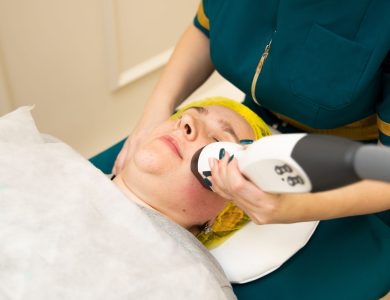
Laser and Light-Based Therapy Billing: Navigating the Non-Covered Service Minefield
That $80,000–$150,000 laser platform in your treatment room represents a revenue promise that can turn into a compliance nightmare faster than any other piece of equipment you own. The trap isn’t the technology—it’s the assumption that FDA clearance equals payer coverage. It doesn’t. The FDA clears devices for safety and efficacy; Medicare and commercial payers decide what they’ll reimburse based on medical necessity, and for a long list of laser procedures, the answer is “nothing.”
When a service falls under a statutory exclusion—meaning Congress or CMS has explicitly declared it non-covered regardless of diagnosis—you need the GY modifier. This tells Medicare the item or service is statutorily excluded and that you expect a denial, which triggers the patient’s financial responsibility under an Advance Beneficiary Notice. Common dermatology examples include laser treatment for rosacea, telangiectasias, or photo rejuvenation when performed for cosmetic purposes. If you skip the GY modifier and bill as if it were covered, you’re risking a false claim.
Commercial payers are murkier. They don’t use the GY modifier system; they rely on their own medical policies, which may cover the same laser for certain diagnoses (like port-wine stains or hypertrophic scars) while flatly excluding it for others. The documentation standard that protects you here is pre-procedure photography and a detailed medical necessity narrative that maps the diagnosis code directly to the payer’s written coverage criteria. If that narrative reads like a cosmetic concern, your denial is already baked in.
For the procedures payers won’t touch, you need a legally distinct cash-pay structure. The mistake practices make is running cosmetic cash payments through the same tax ID, NPI, and office flow as their medical claims. That can violate your participating provider agreements, which often contain clauses restricting balance billing or requiring you to bill all services to the plan. The compliant fix: establish a separate legal entity or clearly segregated service line with its own scheduling, consent forms, and financial policies. Patients must sign a written acknowledgment that the service is cosmetic, not covered, and that no claim will be submitted to their insurer—before the laser ever touches their skin.
Building a Bulletproof Revenue Cycle Workflow: From Scheduling to Zero AR
If your front desk is still photocopying insurance cards without running real-time eligibility, you’re seeding denials before the patient checks in. A bulletproof revenue cycle starts at scheduling, where every dermatology-specific trigger—especially prior auth for biologics, phototherapy, and complex closures—must fire before the visit. The American Academy of Dermatology consistently flags missing authorization as a top denial driver, and in practices handling high volumes of Mohs or injectables, one missed auth can wipe $500–$2,000 in reimbursement instantly.
The Clean Claim Checklist: Intake Through Checkout
Treat patient intake as your first claim scrub. Front-desk staff should verify eligibility, confirm the plan’s accumulated deductible, and cross-reference the scheduled procedure against the payer’s LCD for medical necessity criteria. For high-risk codes—biopsies (11102–11107), destructions (17000–17286), and adjacent tissue transfers (14000–14302)—attach the exact ICD-10 that maps to the LCD’s covered list. If a cosmetic lesion removal is scheduled, collect the ABN and payment upfront. At checkout, match the superbill to the documented reason for visit; if the provider’s note doesn’t support the ICD-10 you’re about to submit, stop and query the provider before the patient leaves.
The 48-Hour Rule and Denial Triage Protocol
Claims aging on a desk lose value by the hour. Institute a hard 48-hour rule: every claim drops within two business days of service. This prevents the compounding errors that occur when batch-submitting weeks later, where one systemic mistake replicates across dozens of claims. When denials return, triage them immediately. If the denial stems from a correctable error—missing modifier 25 on an E/M billed with a biopsy, or a botched units field on a multi-lesion destruction—assign it to a designated appeals specialist within 24 hours. If the denial is for a non-covered cosmetic procedure where documentation clearly lacks medical necessity, write it off and tighten your upfront ABN process. Never let a denial sit unopened beyond 72 hours; the filing window for many commercial payers closes fast.
Assigning the Scrub: LCD-Specific Review Before Submission
Designate one team member—often your most detail-oriented biller—as the pre-submission scrubber. Their job isn’t to code but to validate that every claim matches the payer’s published LCD before it transmits. For Medicare, this means verifying that actinic keratosis destruction codes align with the specific covered indications in the LCD for the contractor jurisdiction you’re billing. For commercial plans with internal cosmetic exclusions, it means confirming the documentation explicitly states symptoms, functional impairment, or failure of conservative treatment. This role pays for itself at $40–$80 per hour when it prevents even two major takebacks per month. If your team lacks the bandwidth to track every payer’s evolving LCDs, that single gap is your clearest signal that outsourcing the scrub function may deliver a stronger ROI than hiring another FTE.