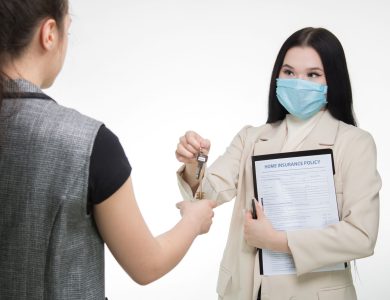
What GreatFlorida Insurance is
GreatFlorida Insurance is a Florida insurance agency, not the insurer underwriting every policy it arranges. The carrier named on the quote and declarations page sets the policy terms and pays covered claims [1].
This distinction matters because financial strength, complaint history, exclusions, billing rules, and claims handling vary by carrier. GreatFlorida’s website references markets including Citizens, Florida Peninsula, Tower Hill, and surplus-lines insurers [1]. Two customers using GreatFlorida could therefore receive different coverage, deductibles, claims procedures, and renewal terms.
An agent may explain options, service a policy, or help contact the carrier after a loss. The carrier’s adjuster generally applies the contract and manages the claim [1]. Service can depend on both the local agency office and the insurer selected.
There is no universal GreatFlorida policy or price. Before accepting a quote, identify the underwriting carrier and review its coverage, exclusions, financial condition, complaint record, and claims process separately from the agency.
Insurance available through GreatFlorida
GreatFlorida advertises the following insurance products and filing services in Florida:
- Personal insurance: homeowners, condo (HO-6), renters, auto, boat, RV, motorcycle, umbrella, and flood insurance, plus SR-22 and FR-44 filings [1].
- Business insurance: commercial auto, commercial property, general liability, and Business Owners Policies, or BOPs [1].
Advertising a product does not mean every applicant, property, vehicle, or business will qualify. Carrier appetite can vary for coastal addresses, older roofs, previous claims, high-value vehicles, and particular business operations.
There is no representative public price range for a GreatFlorida quote. The premium depends on the carrier, applicant, coverage, and underwriting rules. Homeowners rates, for example, can reflect location, construction type, roof age, claims history, limits, and deductibles [1].
The agency’s website provides limited detail about some lines, including renters, RV, motorcycle, and umbrella insurance. Ask for the carrier name, policy form, limits, deductibles, major exclusions, and optional endorsements rather than assuming similarly named policies provide the same protection.
How quotes, policy service, and claims work
A GreatFlorida quote begins an insurance transaction; it does not mean GreatFlorida will insure the risk or pay a claim. The agency collects information and seeks available options, while the selected carrier underwrites the application.
- Review the proposal: Check the carrier, policy form, limits, deductibles, exclusions, discounts, and total premium.
- Allow for underwriting: Availability or price may change after review of driving records, claims history, inspections, roof details, or other property information.
- Check the issued policy: Compare the binder and declarations page with the application and quote. Confirm the insurer, policy period, limits, deductibles, endorsements, and premium.
Auto claims are generally reported directly to the carrier by phone or app. The adjuster handles coverage decisions, repairs, Florida PIP medical payments, and applicable rental reimbursement. The GreatFlorida agent may offer guidance and follow up [1].
Ask which office or service team handles billing questions, endorsements, certificates, and renewals. Keep the signed application, binder, declarations page, inspection reports, payment confirmation, and written answers to important coverage questions.
Florida home and condo coverage
A homeowners policy generally covers the dwelling, other structures, personal property, personal liability, and loss of use after a covered event. Florida law does not require homeowners insurance, but mortgage lenders generally require coverage on financed homes [1].
Flood and wind need separate review. Standard homeowners and HO-6 condo policies exclude flood. Flood protection requires a separate National Flood Insurance Program or private flood policy. Wind or hurricane damage may be covered under the main policy but subject to a separate deductible; some coastal properties may need dedicated wind coverage [1].
Roof condition can affect whether a carrier offers or renews coverage. GreatFlorida says many insurers impose roof-age restrictions or request four-point or roof-condition inspections. Under protections originating in Florida’s 2022 SB 4-D, insurers must offer renewal when a roof has at least five years of useful life remaining, even if it is more than 15 years old. Other underwriting requirements may still apply [1].
A wind-mitigation inspection can document shutters, impact windows, roof tie-downs, roof shape, and secondary water resistance. Qualifying features may earn premium credits, although eligibility and savings vary by carrier [1].
What to check on a homeowners quote
- Dwelling limit and replacement-cost basis
- Hurricane or wind deductible and all-other-perils deductible
- Roof settlement terms, water restrictions, exclusions, and sublimits
- Personal property, loss-of-use, and liability limits
- Flood protection and any required roof, four-point, or wind inspections
What to check on an HO-6 condo quote
An HO-6 policy generally covers interior improvements, personal property, loss of use, and personal liability. The association’s master policy typically covers the building shell, roof, and shared areas, but the association documents determine the division of responsibility [1].
- Review the bylaws and master policy before selecting interior coverage.
- Compare hurricane and wind deductibles.
- Confirm whether separate flood or wind coverage is needed.
- Check loss-assessment coverage, which may be available in limits from $1,000 to $50,000 [1].
Florida auto coverage: minimums and gaps
Florida’s minimum auto requirements are $10,000 in Personal Injury Protection and $10,000 in Property Damage Liability [1]. Those limits do not necessarily cover another person’s injury claim or damage to the insured vehicle.
When comparing quotes, confirm whether each includes:
- Bodily Injury liability: coverage for injuries the policyholder causes to others.
- Collision and comprehensive: protection for the insured vehicle, subject to the policy’s deductibles, terms, and exclusions.
- Uninsured/Underinsured Motorist coverage: protection for injuries and lost wages when the at-fault driver has no insurance or insufficient limits. GreatFlorida says UM/UIM is available with every auto policy it offers [1].
- Rental reimbursement and roadside assistance: optional benefits with carrier-specific limits.
Bodily Injury liability is not universally required in Florida, although it may be required after certain crashes or license reinstatements. GreatFlorida says agents commonly recommend 100/300 limits—$100,000 per person and $300,000 per accident—and may suggest a $1 million to $5 million umbrella for people with substantial assets. These are recommendations, not Florida’s minimum requirements [1].
Personal auto insurance may extend to rental vehicles in the United States, but liability, collision, comprehensive, reimbursement limits, and foreign-country restrictions vary. Confirm the terms with the quoted carrier [1].
SR-22 and FR-44 are proof-of-insurance filings, not separate insurance policies. A DUI can trigger an FR-44 filing for three years and, according to GreatFlorida, increase premiums by about 70% to 150% [1].
How to compare a GreatFlorida quote
- Identify the insurer. Record the underwriting company’s full legal name, not only GreatFlorida Insurance. Ask whether it is an admitted or surplus-lines carrier.
- Check licensing and reliability. Verify the agency or agent through the Florida Department of Financial Services and review available regulatory, financial-strength, and complaint information about the carrier.
- Match coverage before comparing price. Use the same forms, limits, deductibles, and valuation methods. A cheaper quote is not equivalent if it restricts water coverage, lowers limits, excludes UM/UIM, or changes replacement-cost coverage to actual cash value.
- Itemize discounts and costs. GreatFlorida identifies bundling, wind mitigation, deductible changes, roof credits, and monitored security systems as possible homeowners savings [1]. Compare annual premiums, installment fees, inspection costs, and deductible exposure—not only monthly payments.
- Get material answers in writing. This is particularly important for flood, wind, roof settlement, water damage, rental vehicles, excluded drivers, and claims reporting.
Red flags before accepting coverage
- No named carrier: The proposal should identify the underwriting insurer, policy form, and claims contact.
- An unusually low home premium: Check the dwelling limit, hurricane deductible, roof settlement basis, water restrictions, and exclusions. Standard homeowners insurance excludes flood, and coastal policies may have separate wind or hurricane deductibles [1].
- An incomplete condo review: An HO-6 proposal should account for the association bylaws, master-policy responsibilities, deductibles, and potential loss assessments [1].
- “Full coverage” without limits: Ask for the exact Bodily Injury, UM/UIM, collision, comprehensive, and rental reimbursement limits and deductibles.
- Verbal coverage promises: Ask where the stated protection appears in the policy or endorsement.
- Application errors: Correct inaccurate roof ages, prior claims, household drivers, vehicle use, occupancy, business activity, or protective-device information. Ask whether deposits or agency fees are refundable if an inspection changes the premium or causes a decline.
Keep existing insurance active until the new carrier confirms the effective date and provides a binder or declarations page.
Is GreatFlorida Insurance worth considering?
GreatFlorida may be useful for consumers who want agency help comparing Florida personal or business insurance, including policies involving hurricane deductibles, roof inspections, flood exclusions, PIP requirements, or SR-22 and FR-44 filings [1].
Potential advantages
- Access to several personal and commercial insurance categories
- Help comparing carrier options and Florida-specific policy terms
- Agency assistance with applications, policy service, and carrier communication
Potential disadvantages
- No standardized GreatFlorida policy or public price range
- Coverage, eligibility, and service can vary by carrier and office
- The insurer—not GreatFlorida—controls underwriting, contract terms, and claim decisions
It may be a weaker fit for someone seeking one nationwide carrier, a guaranteed online price, or identical service across every location.
Alternatives to compare
- Another independent Florida agency: Request a proposal using matching limits, deductibles, and forms.
- A direct carrier or captive agent: Compare available coverage and service without using the same independent-agency channel.
- Citizens or another Florida property insurer: Ask whether it is an appropriate option rather than assuming one market is automatically best.
Florida Peninsula and Tower Hill may appear as carrier options through GreatFlorida, but they are insurers rather than direct substitutes for GreatFlorida’s agency role [1]. Compare at least two written proposals, verify each carrier, and calculate the maximum out-of-pocket cost under the hurricane, wind, flood, and all-other-perils terms before choosing a policy.