Understanding dental implants cost and financing options is essential before committing to one of the most significant investments in oral health an American adult can make. A single tooth implant averages $2,143 nationally, with a range of $1,646 to $4,157 before the crown is added [1]. Full-mouth restorations can climb to $50,000 or more [5]. The good news: a robust ecosystem of third-party lenders, in-house payment plans, and tax-advantaged accounts makes treatment accessible to patients across a wide range of credit profiles and budgets.
This guide synthesizes current pricing data, financing pathways, and professional recommendations to help you plan realistically for implant treatment as of 2026.
What Dental Implants Are and Why They Cost What They Do
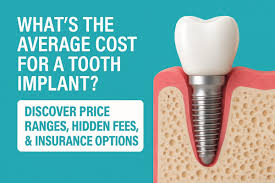
A dental implant is a permanent, surgically placed replacement for a missing tooth root, typically fabricated from titanium alloy because it is nontoxic, biocompatible, and capable of fusing with bone in a process called osseointegration [1]. A complete restoration includes three components: the implant post, the abutment that connects the post to the restoration, and the crown, bridge, or denture that serves as the visible tooth.
Costs reflect the complexity of this multi-stage procedure. Pricing is driven by diagnostic imaging (CBCT scans), surgical placement, materials, the prosthodontist’s or oral surgeon’s expertise, and any preparatory work such as bone grafts, sinus lifts, or extractions. Geographic location also matters: implant fees vary by state and metropolitan area, with urban markets on the East and West Coasts typically charging more than the national average.
Because implants involve surgical placement and custom prosthetics, they are priced significantly higher than alternatives like bridges or removable dentures. However, their durability — often 20 years or longer with proper care — makes the per-year cost competitive over time.
Average Cost of a Single Dental Implant
For a single tooth replacement, the national average implant fee is $2,143, with a range of $1,646 to $4,157 [1]. The crown that sits on top of the implant is billed separately and ranges from $488 to $3,254 depending on material and lab fees [1]. Combined, patients typically pay between $3,500 and $6,500 for a complete single-tooth restoration [6], though some practices and full-service implant centers quote $5,000 to $7,500 [2].
Additional services that can affect the final invoice include:
- Bone grafting: often required when bone density is insufficient
- Sinus lift: common for upper rear teeth
- Tooth extraction: if the failing tooth is still in place
- Diagnostic imaging and consultations
Patients should always request an itemized treatment plan. The headline implant fee does not always include the crown, abutment, sedation, or pre-surgical preparation. Asking for a written estimate covering every line item is the most reliable way to compare quotes between providers.
Full-Mouth and Multi-Tooth Implant Pricing
For patients replacing multiple teeth or an entire arch, pricing structures shift toward bundled treatment protocols. Average costs by treatment type include [1]:
| Treatment | Average Cost |
|---|---|
| Single implant (excluding crown) | $2,143 |
| Implant-supported bridge | $5,195 |
| 3-on-6 implants | $12,474 |
| All-on-4 (per arch) | $15,176 |
| Custom implant dentures (per arch) | $8,000–$13,500 [2] |
Full-mouth reconstruction — both arches — can range from $3,000 on the low end at dental schools to $50,000 or more at premium specialty clinics [5]. The All-on-4 protocol, which uses four strategically placed implants to anchor a full arch of teeth, has become a popular middle-ground option because it avoids the cost and complexity of placing an implant for every missing tooth.
Patients should weigh not just the upfront price but the longevity, maintenance requirements, and bite function of each option before deciding.
Does Dental Insurance Cover Implants?
Insurance coverage for implants is inconsistent and remains one of the most frustrating aspects of treatment planning. Many dental insurance plans classify the implant itself as elective and will not reimburse it, though they may cover the crown portion or related procedures such as extractions and exams [1]. Coverage also depends heavily on the plan’s annual maximum, which for most US dental plans falls between $1,000 and $2,000 per year — often insufficient to make a meaningful dent in implant costs.
Before scheduling treatment, patients should:
- Request a pre-treatment estimate from their insurer in writing
- Verify whether their plan has a missing tooth clause, which can exclude coverage for teeth lost before the policy began
- Check whether implants are categorized as major services and what waiting periods apply
- Ask if the crown, abutment, or bone graft can be billed separately for partial reimbursement
Medical insurance occasionally covers implants when tooth loss results from an accident or medically necessary procedure. Medicare generally does not cover routine dental implants, though some Medicare Advantage plans include limited dental benefits.
Third-Party Financing Options
For most patients, the gap between insurance reimbursement and total cost is bridged through financing. The most widely accepted programs include:
CareCredit is a healthcare credit card accepted at the majority of US dental practices. It frequently offers 0% APR promotional periods (typically 6, 12, 18, or 24 months) when minimum monthly payments are made and the balance is paid in full within the promotional window [1]. Missing the payoff date triggers retroactive interest on the original balance.
Specialty healthcare lenders such as Cherry, Proceed Finance, Lending Club, and others offer fixed-rate installment loans with terms up to 84 months. These lenders often approve applicants with credit scores as low as 580, and approval rates approach 80% [3].
Personal loans and home equity lines of credit may offer lower interest rates for borrowers with strong credit profiles, though they typically lack the promotional 0% periods of healthcare-specific cards.
Monthly payments through third-party financing commonly range from $100 to $200 for single implants and $450 to $900 for full-mouth treatment [7][8], depending on loan term, APR, and down payment.
In-House Payment Plans, HSAs, and Dental Schools
Beyond third-party lenders, several alternatives can reduce the financial burden:
In-house installment plans: Many implant centers offer their own payment programs, sometimes with interest-free terms for qualified patients [10]. Some providers advertise single implants starting at $95 per month and full-mouth implants from $300 per month [3]. These plans typically require a down payment and a soft credit check.
Health Savings Accounts (HSAs) and Flexible Spending Accounts (FSAs): Dental implants are an IRS-qualified medical expense, so HSA and FSA funds can be used tax-free [7]. For patients in higher tax brackets, this effectively reduces the cost by 20% to 30%.
Dental school clinics: Accredited US dental schools offer implant treatment at significantly reduced prices because procedures are performed by supervised students under faculty oversight. Treatment timelines are typically longer, but savings of 30% to 60% off private practice rates are common.
Discount dental plans: Membership-based plans (not insurance) offer flat percentage discounts at participating providers, often 15% to 25% off implant fees.
What Experts Recommend
Dental professionals and patient advocates consistently emphasize several principles when planning for implant treatment. First, get multiple consultations. Pricing variation between providers within the same metropolitan area can exceed 40%, and a second opinion can also reveal whether a less invasive treatment — such as a bridge or partial denture — might meet clinical needs at lower cost.
Second, prioritize the qualifications of the surgeon over headline price. Board-certified oral surgeons, periodontists, and prosthodontists complete years of post-doctoral training specifically in implant procedures. Complication rates and revision costs tend to be lower when treatment is performed by appropriately credentialed specialists.
Third, model the true cost of financing. A 0% promotional offer is genuinely interest-free only if the balance is paid before the promo ends. Specialists recommend dividing the total balance by the number of promotional months and committing to that monthly payment, regardless of the lower minimum the lender requires.
Finally, do not delay treatment indefinitely to save money. Missing teeth can lead to bone loss, shifting adjacent teeth, and additional procedures that increase eventual costs. Where possible, beginning treatment with a phased plan is often more economical than postponing it for years.
When to Consult a Professional
Dental implant decisions are medically and financially consequential, placing them squarely in the YMYL (Your Money or Your Life) category. Patients should consult a licensed dentist, periodontist, or oral surgeon before committing to any financing arrangement. A comprehensive evaluation — including imaging, bite analysis, and medical history review — is the only reliable way to determine candidacy and accurate cost.
Patients with certain conditions, including uncontrolled diabetes, active periodontal disease, heavy tobacco use, or a history of head and neck radiation, may face elevated implant failure risk and should discuss alternatives with their provider. Pricing examples and statistics in this article reflect the most recent available data and are intended for general planning. Actual quotes vary by state, provider, and individual clinical needs. For financial advice specific to your situation, consult a licensed financial advisor or tax professional regarding HSA, FSA, and loan decisions.
References
- CareCredit — Dental Implants Cost and Procedure Guide
- ClearChoice — Dental Implant Financing Options
- Florida Dental Implant Institute — Costs and Financing
- ClearChoice — Dental Implant Cost & Financing Options
- Cherry — Dental Implants Financing: 17 Options to Afford Care
- TeethXpress — Dental Implant Cost & Payment Plans
- ClearChoice — How Much Do Dental Implants Cost?
- Nuvia — Dental Implant Financing Options
- MetLife — How Much Do Dental Implants Cost?
- Beverly Hills Periodontist — Cost and Financing for All-on-4
Frequently Asked Questions
- How much do dental implants cost in the US?
- The national average for a single tooth implant is $2,143, with a range of $1,646 to $4,157, excluding the crown [1]. Crowns add another $488 to $3,254 [1], bringing the typical all-in cost for a single tooth restoration to between $3,500 and $6,500 [6]. Full-arch treatments such as All-on-4 average around $15,176 per arch, while full-mouth reconstructions can range from $3,000 at dental schools to $50,000 or more at premium specialty clinics [1][5]. Geographic location, provider expertise, and preparatory procedures like bone grafts significantly affect final pricing.
- Does dental insurance pay for implants?
- Coverage varies widely. Many dental plans classify the implant post itself as elective and will not reimburse it, though they may cover the crown, extraction, or bone graft separately [1]. Annual maximums of $1,000 to $2,000 typically cap how much any plan will pay. Patients should request a written pre-treatment estimate from their insurer, check for missing tooth clauses, and ask whether procedures can be billed individually to maximize partial reimbursement. Medical insurance may apply if tooth loss resulted from an accident, and some Medicare Advantage plans offer limited dental benefits.
- What credit score do I need to finance dental implants?
- Many healthcare-specialty lenders approve applicants with credit scores as low as 580, and approval rates can reach approximately 80% [3]. CareCredit and similar healthcare credit cards may approve borrowers with scores in the mid-600s, while traditional personal loans and home equity options usually require higher scores for the best rates. If your credit is limited, options include in-house payment plans from the dental practice, co-signers on third-party loans, or starting with a phased treatment plan. Some providers also offer interest-free in-house installment options that rely on income verification rather than credit alone [10].
- Can I use my HSA or FSA for dental implants?
- Yes. Dental implants are an IRS-qualified medical expense, which means you can pay for them with tax-free dollars from a Health Savings Account (HSA) or Flexible Spending Account (FSA) [7]. For patients in higher federal and state tax brackets, this can effectively reduce the cost of treatment by 20% to 30%. HSAs roll over year to year and stay with you across employers, making them especially useful for saving toward implants. FSA funds are typically use-it-or-lose-it within the plan year, so timing treatment around your benefit year matters.
- What is the cheapest way to get dental implants?
- Dental school clinics offer the largest savings, often 30% to 60% below private practice rates, because procedures are performed by supervised students under faculty oversight. Other cost-reduction strategies include shopping multiple consultations (price variation in a single market can exceed 40%), using HSA or FSA funds for tax savings, joining a discount dental membership plan, and taking advantage of 0% APR promotional periods through healthcare credit cards [1]. Some implant centers also advertise treatment starting near $95 per month through in-house financing [3]. Avoid traveling abroad for implants without weighing follow-up complications.
- How long do dental implants last?
- With proper care, dental implants can last 20 years or longer, and many patients keep them for life. The titanium post itself is highly durable because it fuses with the jawbone through osseointegration [1]. The crown attached to the implant typically has a shorter lifespan of 10 to 15 years and may need replacement due to normal wear. Longevity depends on oral hygiene, regular dental visits, avoiding tobacco, and managing conditions like diabetes or gum disease. When viewed over a 15- to 20-year horizon, implants often prove more economical than repeatedly replacing bridges or dentures.
- Are 0% APR dental implant financing offers really free?
- They are interest-free only if you pay the entire balance before the promotional period ends. Programs like CareCredit typically offer 6, 12, 18, or 24-month deferred-interest promotions [1]. If any balance remains when the promotion expires, interest is often charged retroactively on the original loan amount, not just the remaining balance. To use these offers effectively, divide the total balance by the number of promotional months and commit to that monthly payment regardless of the lower minimum the lender requires. Always confirm the terms in writing before signing.
- What are typical monthly payments for dental implants?
- Monthly payments depend on the treatment type, loan length, and interest rate. For single implants, payments commonly range from $100 to $200 per month through third-party financing [7]. Full-mouth implant treatment generally falls between $450 and $900 per month [8], though some providers advertise full-arch financing starting near $300 per month [3]. Longer loan terms reduce monthly payments but increase total interest paid. Patients should request a complete amortization schedule showing total cost over the life of the loan, not just the monthly figure, before agreeing to any financing arrangement.